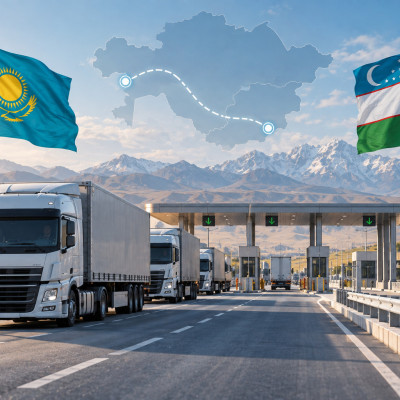
Kazakhstan and Uzbekistan Move Toward Seamless Road Transit
Kazakhstan and Uzbekistan are taking another step toward making cross-border road freight faster and easier.
Following a meeting between the two countries’ transport authorities in Samarkand, the sides agreed to establish a joint working group focused on simplifying international road transport procedures.
- Fewer barriers at the border
The key priorities include reducing administrative barriers, simplifying transit procedures and expanding the use of electronic document management.
The goal is clear: less paperwork and fewer delays for carriers moving cargo between and through Kazakhstan and Uzbekistan.
- Toward unrestricted transport permits
The two countries are also discussing a gradual transition toward an unrestricted exchange of permits for international road freight transport.
For logistics companies, these changes could mean faster border crossings, more predictable transit times and lower administrative costs.
The initiative is another important step toward creating a more seamless transport network across Central Asia.
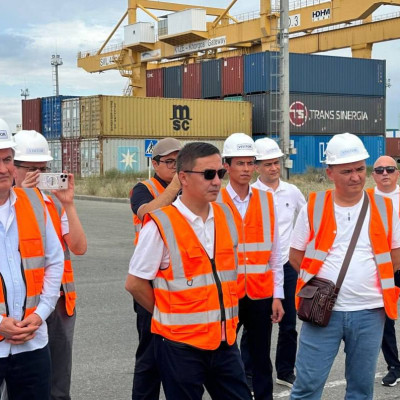
Kazakhstan and Uzbekistan to create a joint logistics hub near the Chinese border
Kazakhstan and Uzbekistan are strengthening their logistics cooperation with plans to establish a joint venture at Altynkol railway station in Kazakhstan, one of the key gateways for freight traffic from China.
The project is expected to focus on developing container transportation and joint cargo handling, making freight flows between China and Central Asia faster and more efficient.
Altynkol already plays an important role in China–Europe and China–Central Asia rail services. The new partnership could further increase its importance as a regional logistics hub.
For Uzbekistan, the project means better access to Chinese freight flows and international transport corridors. For Kazakhstan, it supports the country’s strategy to strengthen its position as a major transit hub between China, Central Asia and Europe.
Central Asia is rapidly building its own logistics infrastructure — and cooperation between Kazakhstan and Uzbekistan is becoming an increasingly important part of this process.
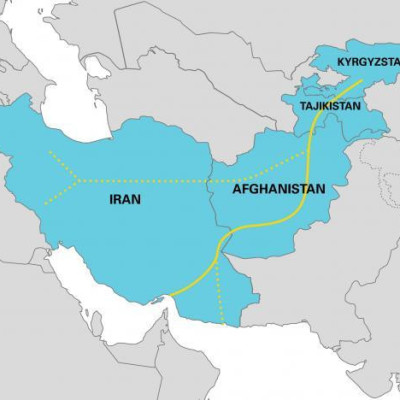
Tajikistan, Iran and Afghanistan Agree to Develop New Transport Corridor
Tajikistan, Iran and Afghanistan have agreed to establish a new regional transport corridor that will connect Iranian and Tajik markets through Afghan territory.
Representatives of the three countries’ transport authorities signed the agreement in Mashhad, Iran, according to the Iranian news agency IRNA.
The new route is expected to enable more efficient movement of goods between Iran and Tajikistan, creating an additional overland connection between the Middle East and Central Asia. The first shipment under the new corridor is expected to be launched within a month.
Although specific delivery times and operational details have not yet been announced, the agreement marks another step toward strengthening regional trade links and expanding transit opportunities across Central Asia.
The development comes as Tajikistan continues to modernize its transport procedures. In early summer 2026, the country introduced the e-Permit electronic permit system, with the first 100 electronic transport permits issued to Uzbek carriers.
The new digital tools, combined with the emerging Iran–Afghanistan–Tajikistan corridor, could help improve cross-border transport efficiency, reduce administrative barriers and create new opportunities for logistics companies operating in the region.
For Central Asian traders and carriers, the corridor represents a potential new route to diversify supply chains and improve connectivity with Iranian ports and international markets.
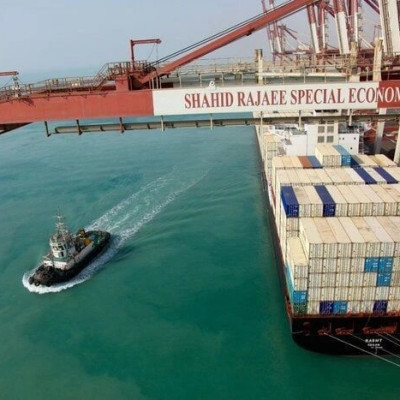
Kazakhstan Plans to Build a $25 Million Logistics Center in Iran’s Shahid Rajaee Port
Kazakhstan and Iran have signed an investment agreement for the construction of a logistics center at Shahid Rajaee Port in Bandar Abbas, located on the northern shore of the Strait of Hormuz.
The facility is expected to be built in the port’s rear area on a site of around 15 hectares, with total investment estimated at $25 million.
According to Iranian port officials, the project is being developed with a strong focus on rail-based cargo transport and will include a specialized rail terminal. It is expected to operate as part of a broader chain of logistics hubs linking Kazakhstan, Shahid Rajaee Port, and other shipping points in order to strengthen regional transit flows.
The agreement is valid for 27 years, including two years for construction, with terms to be reviewed every five years. The future logistics center is expected to handle around 1.5 million tons of cargo.
The project reflects Kazakhstan’s broader strategy to expand its transport and transit access through Iran and to create additional infrastructure for handling both domestic and Central Asian cargo flows.
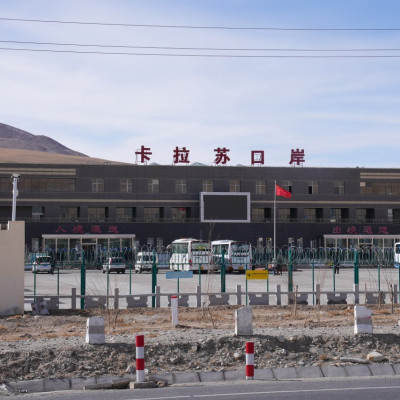
China joins modernization project at the Kulma / Karasu border crossing with Tajikistan
China and Tajikistan have agreed to prepare a feasibility study for the reconstruction of infrastructure at the Kulma / Karasu border crossing. The cost of this stage is estimated at 1.42 million yuan, and according to available information, it will be covered by the Chinese side.
Tajikistan, for its part, is expected to ensure the safety of Chinese specialists and simplify import and export procedures for equipment needed to implement the project.
The exact facilities and infrastructure elements to be upgraded have not yet been officially disclosed. However, the project is strategically important: Kulma / Karasu is the only land border crossing between China’s Xinjiang Uyghur Autonomous Region and Tajikistan’s Gorno-Badakhshan Autonomous Region.
The crossing has been operating since 2004, and since 2016 it has functioned year-round. Plans for modernization were already being discussed in 2023, including in connection with road repairs on the Tajik side. According to Tajikistan’s Ministry of Transport, 472,800 tons of cargo passed through the checkpoint in 2023.
For the region, this is more than an infrastructure upgrade — it is a step toward stronger transport connectivity between China and Central Asia.